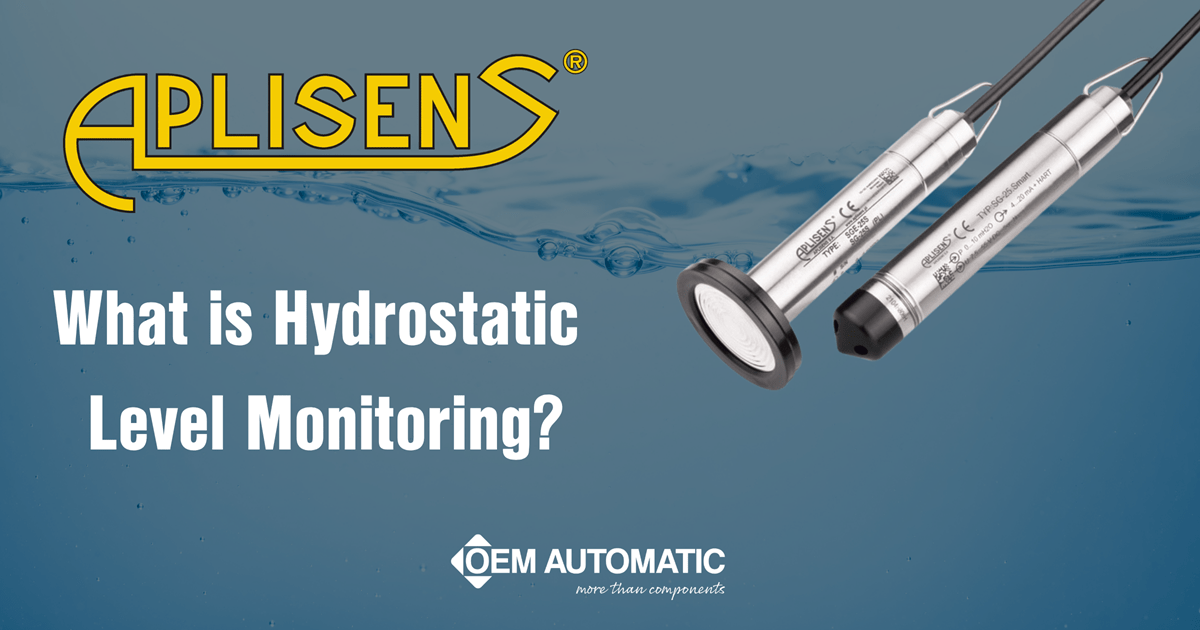
What is hydrostatic level monitoring?
2026-04-21
In it's simplest terms hydrostatic level monitoring is:
Pressure = liquid density × gravity × height
Because the measurement is pressure‑based, anything that interferes with pressure reference, liquid stability, or density assumptions can affect accuracy.
Hydrostatic level probes are one way to monitor level in a liquid based application. A hydrostatic level probe measures liquid level indirectly, by sensing pressure at a known depth.
The deeper the probe, the higher the pressure—and that pressure is converted into a level reading.
The image below demonstrates how hydrostatic level probes work.
Learning hub
Hydrostatic level probes
Where Are Hydrostatic Level Probes Used?
Hydrostatic probes are widely used across water and wastewater applications, including:
- Wet wells and pumping stations
- Boreholes and reservoirs
- Balance tanks and sumps
- Open channels and treatment processes
They’re popular because they’re:
- Compact and robust
- Easy to install
- Suitable for submerged applications
Key advantages of hydrostatic level probes
When the application is suitable and the installation is done properly, hydrostatic level probes offer several clear benefits:
- Simple, proven measuring principle
- Compact design for submerged use
- Ideal for wells, tanks, reservoirs and wet wells
- Available in standard, smart, and specialist materials
- Options for analogue output and HART-based configuration
For example, the Aplisens range includes standard SGE-25 probes, narrow-diameter versions for wells and piezometers, wastewater variants for contaminated media, smart versions with 4–20 mA plus HART, and specialist material options for more aggressive liquids.
Questions to ask:
If you are selecting a probe for a new application, consider these questions first:
- What liquid are you measuring?
- Is the density stable, or does it change?
- Is the tank open, vented, sealed or pressurised?
- Is there turbulence, inflow, aeration or agitation?
- Are there solids, contamination or abrasive particles in the liquid?
- What measuring range is actually needed?
- Do you need a standard analogue output, or a smart variant with HART?
- Is there a hazardous area, marine requirement or corrosion risk to consider?
Those questions make a big difference to both probe choice and long-term reliability. If you’re unsure what probe you may need in your application – leave it to the experts at OEM Automatic. Our Pressure, Flow and Level experts can help to specific what product you need to accurately measure the level in your application.
Things to watch out for
Hydrostatic level probes are not the right answer for every job. They are most straightforward in open or vented tanks. For sealed or pressurised applications, gas pressure above the liquid can affect the reading, so compensation or a different level measurement method may be required.
Hydrostatic level probes also need more care in applications involving:
- Significant density variation
- Severe turbulence or aeration
- Corrosive media without the correct wetted materials
- Dirty or abrasive liquids without the right diaphragm design
- Poor cable routing or badly protected terminations
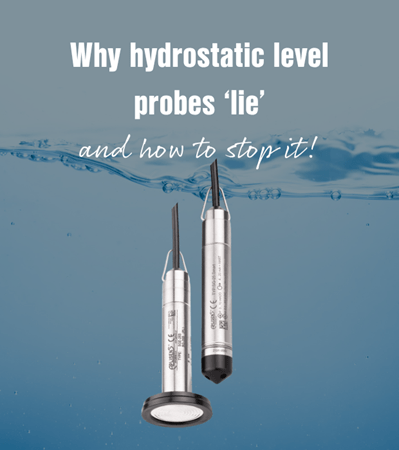
If you’re experiencing issues with a hydrostatic level probe in your application, take a look at our article on why hydrostatic level probes ‘lie’, it could help to explain why you’re having problems and the experts at OEM give you all the solutions!



Need Help with a level monitoring Application?
Our Pressure, Flow & Level Solutions Team is here to help! Whether you need expert advice, product recommendations, or a proof-of-concept demonstration:
 Phone support – Call us at 0116 284 9900
 Email support – Contact us at [email protected]
 Live chat – Available on our website
 On-site visits – Our expert sales engineers can provide in-person demos and application support. Email [email protected] to arrange a visit or call us.
Let us help you find the right level monitoring solution for your application. Contact us today!
Aplisens - SGE-25 Smart Level Sensor
Hydrostatic
- 1..100mH2O
- 4-20mA & HART protocol
- ATEX option
- Marine certification (DNV) option

Aplisens - SGE-25 Level Sensor
Hydrostatic
- 1..500mH2O range
- 4-20mA
- ATEX option
- Marine certification (DNV) option