SENSECA
Honsberg - FIS Series Flow Meter
Magnetic-Inductive
Model FIS is a flow sensor in stainless steel with absolutely no moving parts. It has been developed to measure, among other things, water flows in large pipe dimensions.
Special versions
•Clamp connection for plastic tube
- For liquids up to 25 bar
- For DN 50-400
- Wetted parts in stainless steel


Selected variant

Mag ind Flow sensor,4-20mA, 1"tee weld in, 1-8m/s, adjustable
Art:

Selected variant
Technical data
| Accuracy | ± 5% of the measured value |
|---|---|
| Connection type | External thread, G 1 " |
| Electrical connection | Cable screw, PG 9 |
| Flow area max | 8 m/s |
| Flow area min | 1 m/s |
| Function | Magnetically inductive |
| Insulation material | Ceramic |
| IP class | IP65 |
| Material of body | Stainless steel 303 |
| Material of seals | Viton |
| Material of wetted parts | Stainless steel 316L |
| Material welding muff | Stainless steel 303 |
|---|---|
| Power consumption | 50 mA |
| Pressure range max | 25 bar |
| Repeatability | 2 % |
| Signal outputs | 4-20 mA |
| Temperature of media from | -25 °C |
| Temperature of media to | 150 °C |
| Type of flow component | Flow Measuring |
| Voltage dc max | 24 V |
| Weight | 2.4 kg |


Product description
Model FIS is a flow sensor in stainless steel with absolutely no moving parts. It has been developed to measure, among other things, water flows in large pipe dimensions.
Special versions
•Clamp connection for plastic tube
Add product as a new cart row
You already added this product. Choose whether to increase quantity on the existing row or add the product as a new row.
Related

Water & Wastewater Solutions
OEM Automatics water and wastewater application specialists have gathered all our solutions in one place. Our products are used in everything from small municipal water works to larger regional plants.

Robotics solutions
Robotics has revolutionised industry, enabling efficiency, higher production capacity and increased safety. For a robot solution to function optimally, the right components are required.
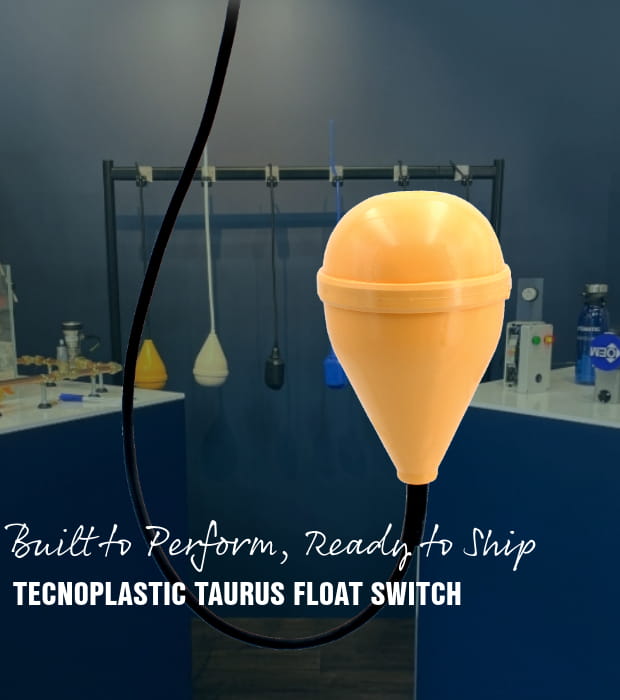
Float switches - built to perform
Whether you're looking to upgrade your current solution or secure a more robust float switch for your next project, Taurus delivers performance you can count on.

Why hydrostatic level probes lie and how to stop it
In this article, our application experts explain why hydrostatic level probes appear to lie, the most common failures, and how OEM, working with Aplisens, can help engineers prevent them.

What is hydrostatic level monitoring?
A hydrostatic level probe measures liquid level indirectly, by sensing pressure at a known depth. When the application is suitable and the installation is done properly, hydrostatic level probes offer several clear benefits.

understanding viscosity - And Why It Matters When Choosing A Pump
Whether you’re pumping water, chocolate, oil or peanut butter knowing the product’s viscosity is essential to selecting the right pump. Find out more about viscosity and which pump may be suitable for your application!
