PULS
Redundant module 20 A Piano Series PIRD20.241
The PIRD20.241 is a redundancy module, which can be used to build 1+1 and N+1 redundant systems. It is equipped with two input channels, which can be connected to power supplies with up to 10A output current and one output, which can carry nominal currents up to 20A. The module is suitable for power supplies with constant current overload behavior as well as any kind of “hiccup” overload behavior. The PIRD20.241 is the perfect solution to use in a redundant system, if the power supply itself is equipped with a DC-OK signal. Another application for this redundancy module is to separate sensitive loads from non-sensitive loads. This avoids the distortion of the power quality for the sensitive loads which can cause controller failures.
- 39 mm wide
- Two diodes
- Screw terminals
- Cost effective solution



Selected variant
Technical data
Input data |
|
|---|---|
| Input voltage dc | 12-28 V |
| Input voltage dc min | 9 V DC |
| Input voltage dc max | 35 V DC |
| Input current per channel max | 10 A |
Output data |
|
| Output voltage | 24 V DC |
| Output current | 20 A |
| Output current max | 26 A |
Dimensions |
|
| Width | 39 mm |
| Height | 124 mm |
| Depth | 124 mm |
| Weight | 0.28 kg |
Other |
|
|---|---|
| Input / Output Separation | Diode |
| Approvals | ATEX, CE, CSA, IECEx, UL |
| IP class | IP20 |
| Material protection | ABS plastic |
| Series | Piano |
| Voltage drop over semiconductor | 560 mV |
| Temperature min without derating | -40 °C |
| Temperature max without derating | 55 °C |
| Type Power Supply | Redundancy modules |


Product description
The PIRD20.241 is a redundancy module, which can be used to build 1+1 and N+1 redundant systems. It is equipped with two input channels, which can be connected to power supplies with up to 10A output current and one output, which can carry nominal currents up to 20A. The module is suitable for power supplies with constant current overload behavior as well as any kind of “hiccup” overload behavior. The PIRD20.241 is the perfect solution to use in a redundant system, if the power supply itself is equipped with a DC-OK signal. Another application for this redundancy module is to separate sensitive loads from non-sensitive loads. This avoids the distortion of the power quality for the sensitive loads which can cause controller failures.
Add product as a new cart row
You already added this product. Choose whether to increase quantity on the existing row or add the product as a new row.
Related

Robotics solutions
Robotics has revolutionised industry, enabling efficiency, higher production capacity and increased safety. For a robot solution to function optimally, the right components are required.

Why Colour Brilliance Matters in Industrial Signalling
Discover why colour brilliance matters in industrial signalling. Improve safety, reduce misinterpretation and ensure clear machine status in any environment.

Advantages of Cable Coils
Have you ever wondered if there's any difference between cable coils and cable reels?
Our cable experts take you through the advantages of using cable coils.

We now offer cable
What tri-rated cable are you currently using? Does the product or service you receive leave you wanting more? It’s time to ask the question. Because now, you’ve got options.
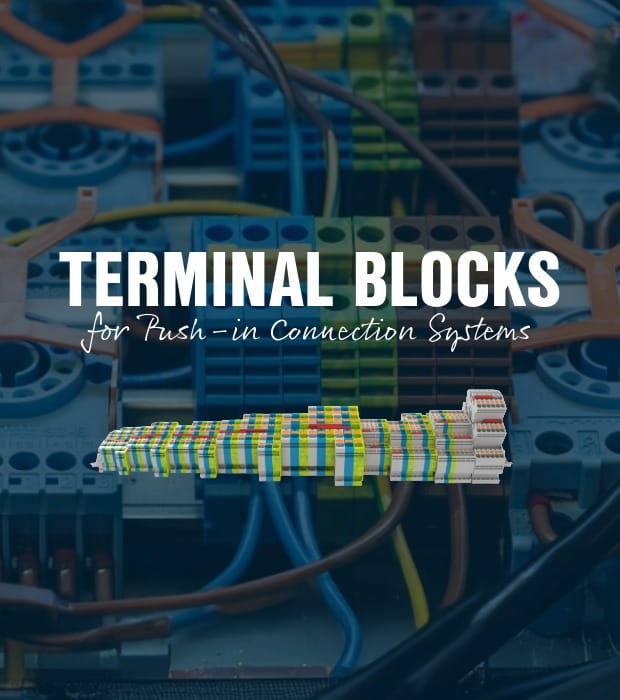
Terminal Blocks For Push In Connection Systems
This innovative push-in connection system enables time savings of up to 50%, whether you're wiring control panels or managing complex installations

Electrical Protection in the Solar Era: How to Choose Fuses for Modern Photovoltaic Installations
Solar energy has become a pillar of the global energy transition. The experts at OEM Automatic have broken down the role of photovoltaic fuses and their contribution to solar systems, as well as, how to choose the right solution for you.
